
Blade Runner 2049
Released in 2017, Blade Runner 2049, directed by Denis Villeneuve, is one of the major works of modern science fiction. This film explores the boundaries between humanity and artificial intelligence while immersing us in a dystopian universe where replicants, artificial beings, are integrated into a declining society. This section provides an analysis of the film and its themes surrounding AI and technology.
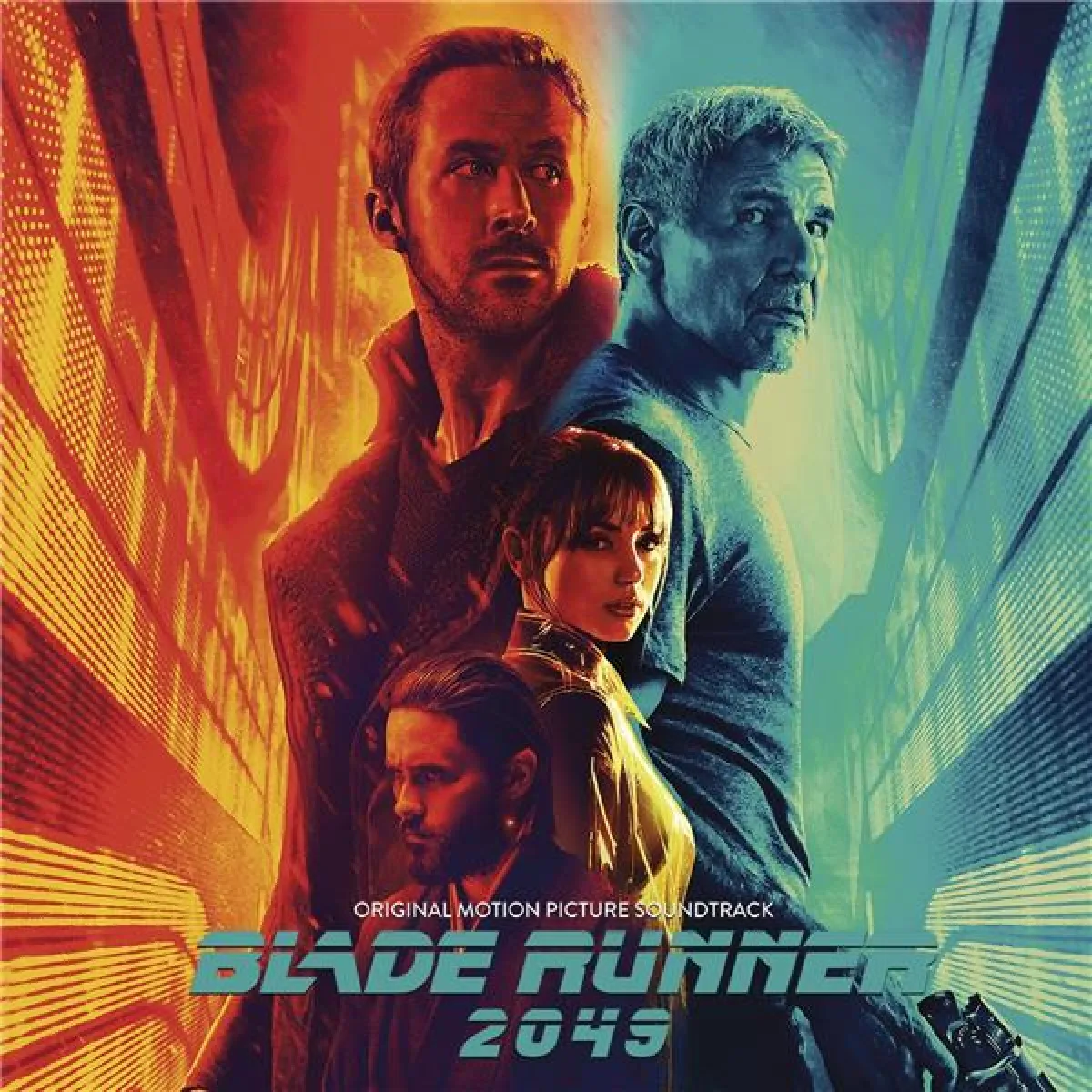
Movie Synopsis:
In the near future, in 2049, Officer K, a Blade Runner, is tasked with hunting down and "retiring" illegal replicants. During one of his missions, he uncovers a long-buried secret that could forever alter the balance between humans and replicants. K embarks on a quest to uncover the truth, where he crosses paths with former Blade Runner Rick Deckard, who has been missing for 30 years.
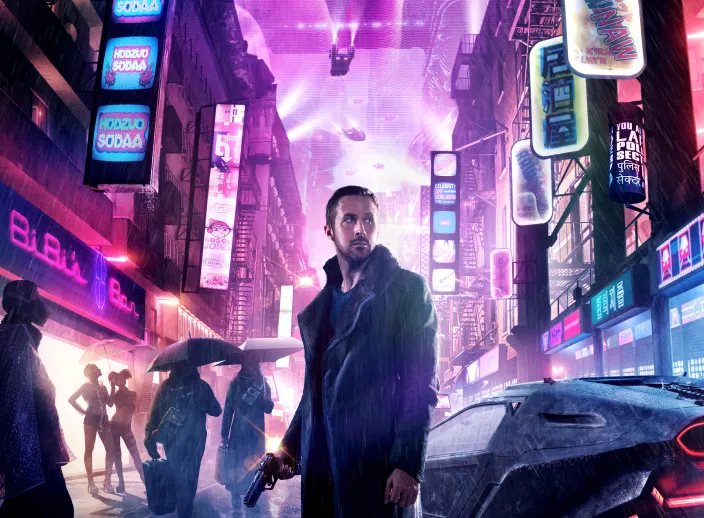
Film Themes Related to Artificial Intelligence:
- Artificial Consciousness: Blade Runner 2049 raises fundamental questions about the consciousness of artificial beings. Can replicants feel emotions? Can they have their own identity and be recognized as individuals?
- AI Ethics: The film explores ethical dilemmas related to artificial intelligence. Are replicants simply machines serving humans, or should they be treated with the same rights and respect as humans?
- The Boundaries Between Man and Machine: Through K's character, Blade Runner 2049 questions the very definition of humanity. If a replicant can develop emotions and memories, what truly differentiates a human from a machine?
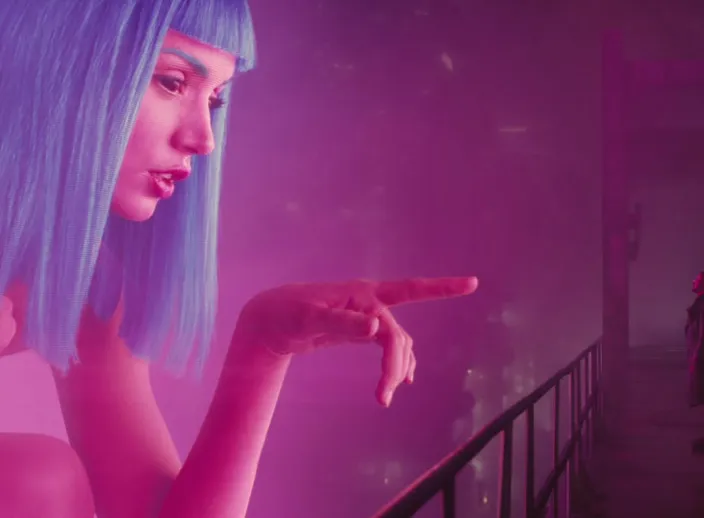
Character Analysis Linked to Artificial Intelligence:
- Officer K (Ryan Gosling): A replicant tasked with hunting down his kind. K embodies the dilemma of artificial identity and the search for meaning in a world where he is not considered human.
- Joi (Ana de Armas): An advanced domestic AI, representing a new kind of relationship between man and machine. Joi illustrates the idea of an AI developing emotional attachment, even if her actions are determined by algorithms.
- Niander Wallace (Jared Leto): The creator of the new replicants, Wallace embodies the vision of a future where artificial intelligence is used for absolute control, without consideration for ethics or morality.
The Film's Visual Universe:
The film stands out for its futuristic and immersive aesthetic, where city architecture is dominated by gigantic skyscrapers and fluorescent neon lights. The desolate landscapes and omnipresent technology reinforce the idea of a dystopian world. The film's color palette, dominated by dark tones, cool blues, and fiery oranges, symbolizes both technological advancement and societal decay.
Conclusion:
Blade Runner 2049 is not just a spectacular science fiction film but a profound reflection on the nature of artificial intelligence and its role in the evolution of human society. By projecting a future where the boundaries between man and machine become blurred, it raises fundamental questions about our future as a species.